
What Is Function Health? And Is It Worth It?
If you’re even moderately interested in health optimization, longevity, or preventative medicine, you’ve probably heard of Function Health. It sits in that new category of wellness services that feels somewhere between a very thorough annual physical, a personalized health dashboard, and a biohacker starter kit.
The promise is simple: instead of waiting until something feels wrong, Function helps you get a much more detailed view of what is happening inside your body now.
But is it worth it? We tested one year of Function, including add-ons like food sensitivities and men’s / women’s health. Here are our honest thoughts and everything you need to know about Function.
👉 Want to skip to the insights and actions? Check out our other article: “Longevity Health Routine: How We Stay Healthy Without Compromising On Lifestyle”

What Is Function Health?
Function Health is a membership-based health testing platform that gives you access to a large panel of lab tests, tracks your biomarkers over time, and turns your results into an easy-to-read dashboard with clinician-reviewed insights.
Instead of only testing the basics you might get at a typical annual physical, Function looks across a much wider set of categories, including:
heart health
hormones
thyroid
liver and kidney function
metabolic health
inflammation
nutrients and electrolytes
heavy metals and toxins
fertility-related markers
immune and autoimmune markers
potential cancer-related signals
The appeal is that you get a fuller snapshot of your health in one place, without needing to ask a doctor for every individual test or fight with insurance over what is covered.
It is very much designed for people who want data.
How Much Does Function Health Cost?
Function Health currently starts at $365 per year for a one-year membership, which their marketing often touts as just $1 per day. They also sometimes offer promotional multi-year pricing, such as two years for a lower effective annual rate.
That membership includes access to one large annual lab panel, one smaller mid-year lab panel, clinician review, a personalized action plan, and a dashboard where you can track your results over time.
There are also optional add-ons, including additional lab tests and access to advanced imaging options like MRI and CT scans through partners. Those can raise the total cost significantly.
So while the base membership may sound relatively reasonable compared with concierge medicine, the real question is whether you will actually use the data and whether you are someone who benefits from that level of detail.
The Process: What It’s Like to Use Function Health
The process is fairly straightforward.
1. Sign up and complete your health profile
You start by creating an account and filling out your health information. This usually includes your medical history, goals, symptoms, family history, lifestyle, and any areas of concern.
This part matters because the results are not just numbers in a vacuum. Function uses your profile to help frame what the results might mean for you.
We were actually pleasantly surprised to see that health concerns we flagged were later referenced in Step 4.
2. Schedule your lab testing
Function partners with major lab locations, so you schedule your blood draw through the platform. Depending on where you live, availability may vary. We used Quest Diagnostics, which was extremely easy.
The lab portion can involve more than one visit, and you may need to fast or follow certain instructions before testing. This is not hard, but it is more involved than a quick annual physical.
3. Get your results
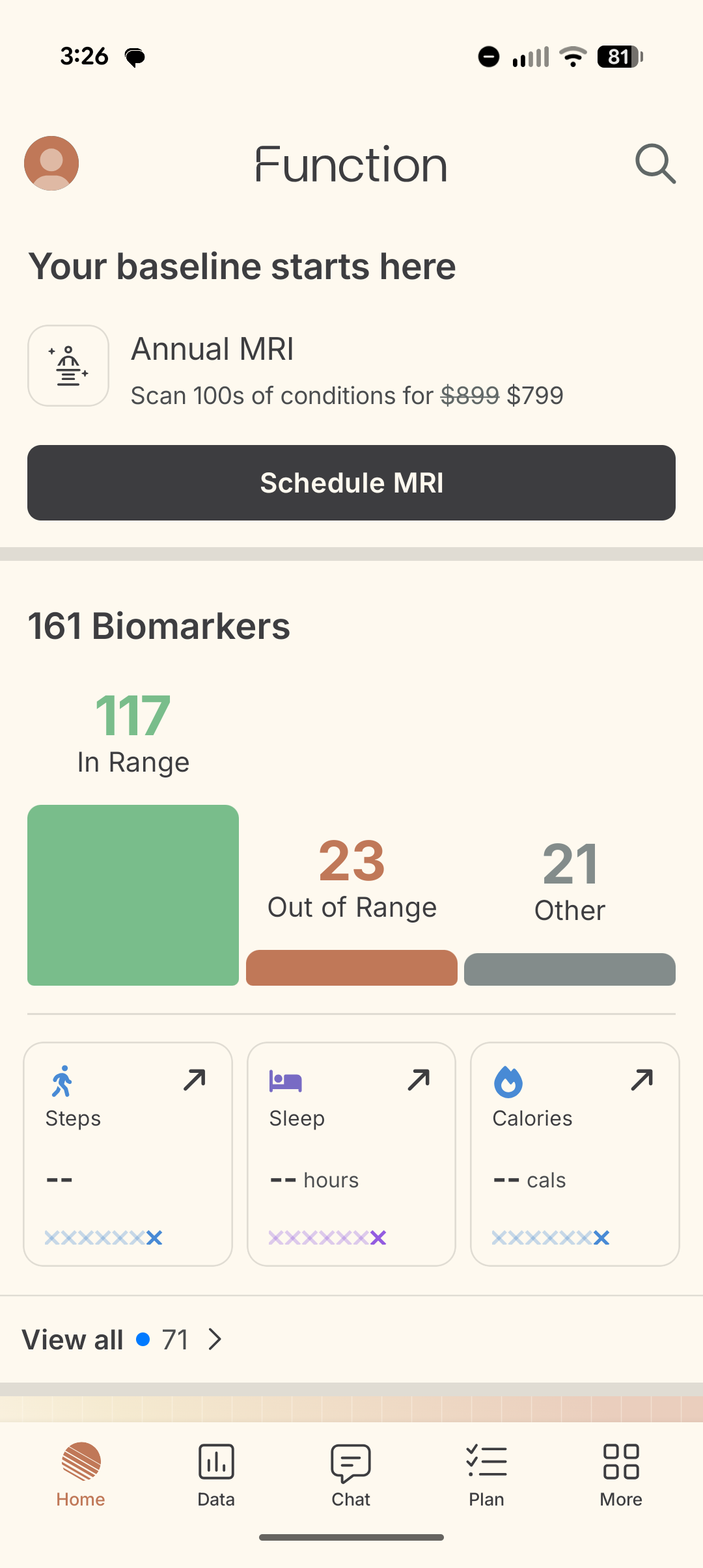
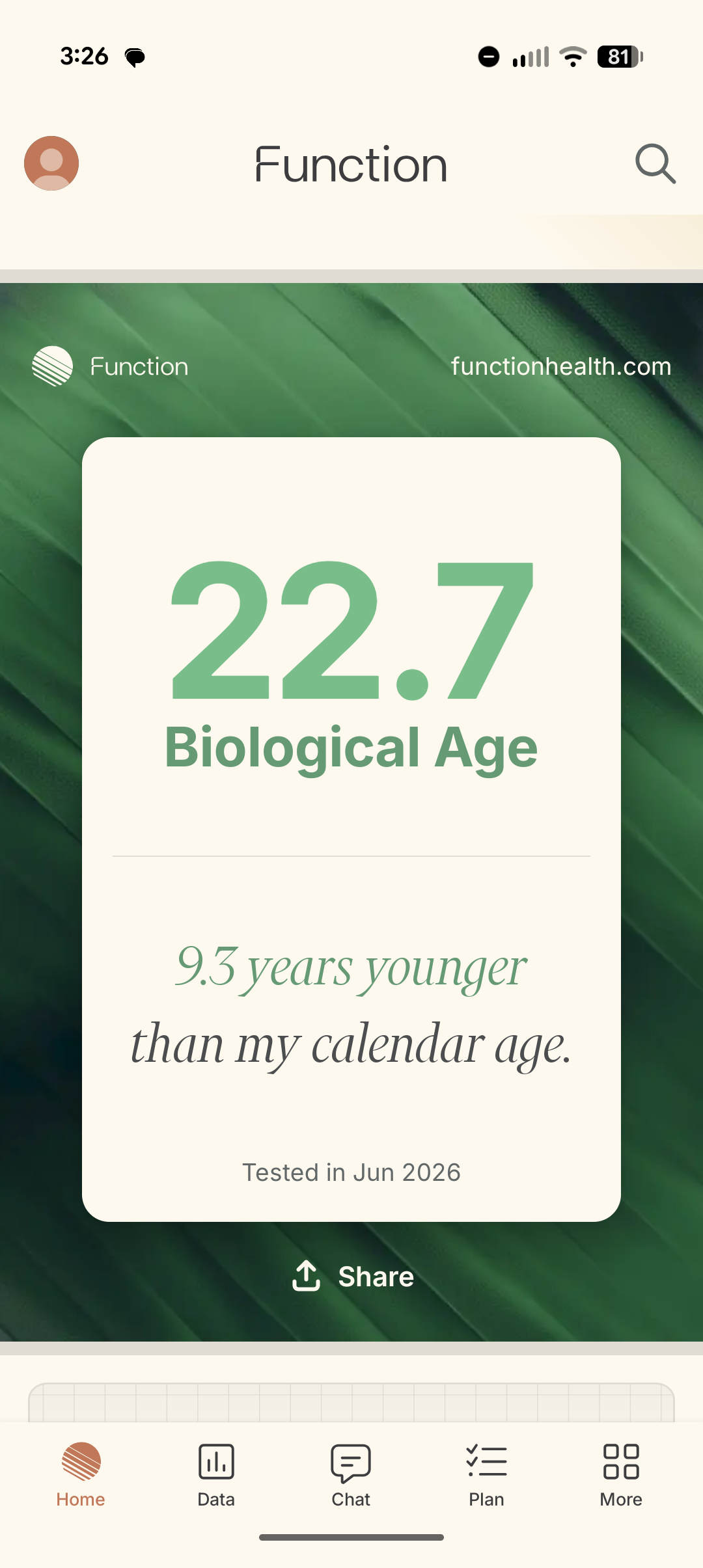
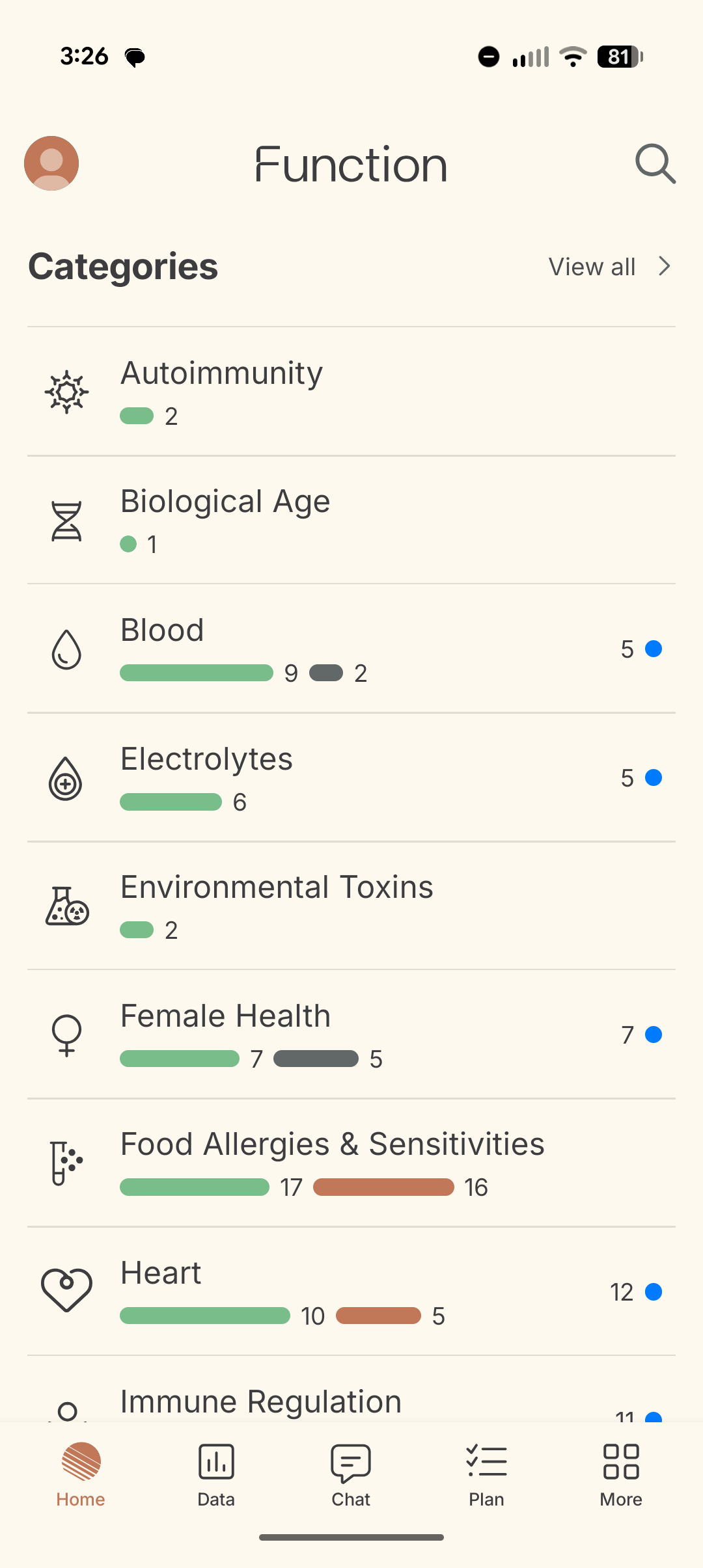
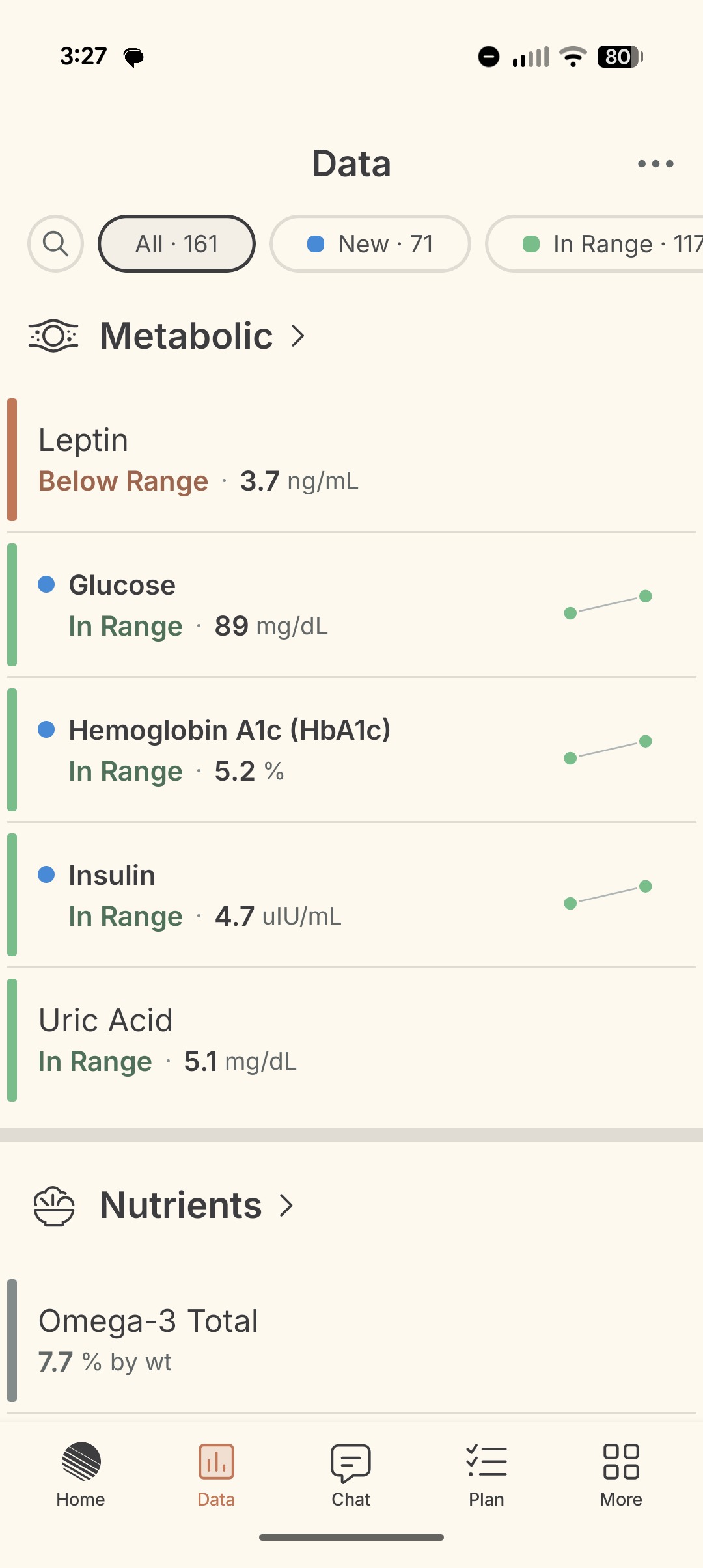
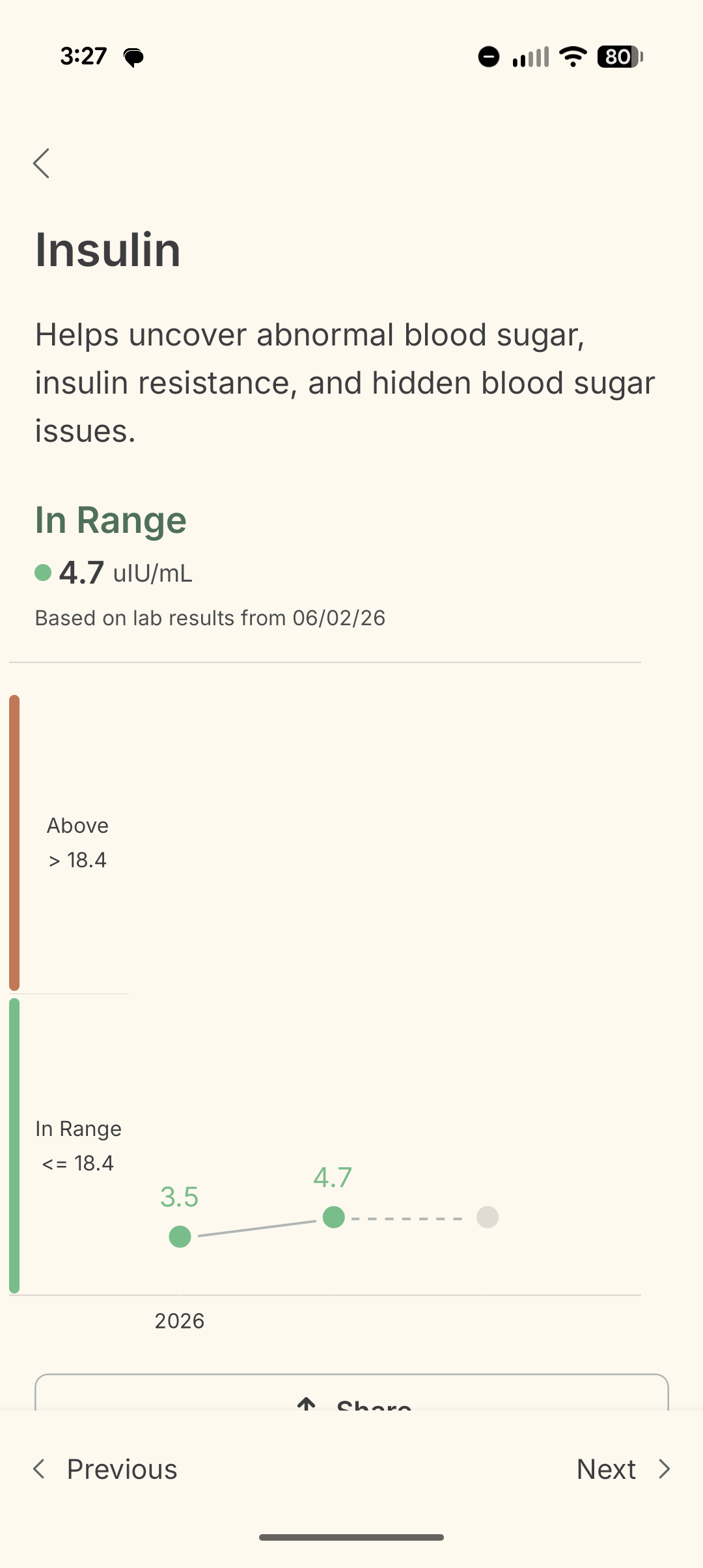
After your labs are processed, your results appear in the Function dashboard. The platform organizes the data by category, flags areas that are out of range or worth watching, and provides explanations for what each marker means.
This is one of Function’s biggest strengths. Traditional lab reports can be confusing, overly clinical, and hard to interpret. Function makes the results much more digestible.
We were also very pleased to see that results came in extremely quickly. We had initial biomarkers as quickly as a day or two after the bloodwork, and the full results ready in about 2 weeks on average.
4. Review recommendations and action steps
Function also provides clinician-reviewed insights and personalized recommendations. These may include suggestions related to nutrition, supplements, exercise, lifestyle, follow-up testing, or conversations to have with your doctor.
This is helpful, but it is important to keep the right expectation: Function gives you information and guidance. It is not the same as having a physician who knows you deeply and can diagnose, prescribe, and manage care over time. We were pleased to see context from our health history profile show up here though!
We should also call out that we STRONGLY suspect that the clinician notes are generated by AI and then perhaps reviewed by an actual physician. We’re not mad about this, but we do think it’s worth being aware of.
The Results: What You Actually Get
The most valuable part of Function Health is that it gives you a more complete picture of your baseline health.
You may learn things like:
whether your cholesterol picture is more nuanced than a standard LDL number
whether your blood sugar and insulin markers suggest metabolic risk
whether your thyroid looks optimal or just “normal”
whether you are low in certain nutrients
whether inflammation markers are elevated
whether hormones are outside an ideal range
whether there are liver, kidney, or immune markers worth watching
This can be empowering. It can also be overwhelming.
For people who love optimization, this is exactly the appeal. You get data, track changes over time, and see whether your lifestyle changes are moving the numbers.
For someone who is anxious about health data, though, Function could easily become too much. More information is not always better if it leads to stress, over-interpreting minor abnormalities, or chasing every slightly imperfect marker.
What We Like About Function Health
It gives you access to more data than a typical checkup
Most standard physicals are limited. Function gives you a much wider view, which can be useful if you want to understand your health more proactively.
The dashboard is easy to understand
Instead of getting a PDF full of numbers, you get an organized health dashboard. That makes the information more actionable. Plus, it’s extremely easy to understand. They do a really good job of explaining health in a way that anyone can comprehend.
It helps you track trends over time
One lab result is useful. A pattern is more useful. Function’s ongoing model makes it easier to see whether things are improving, worsening, or staying stable.
It can help you ask better questions
Even if Function does not replace your doctor, it can help you walk into your next medical appointment with clearer information and better questions.
What We Don’t Like
It is expensive
At $365 per year, this is still a premium wellness product. And once you start adding additional tests or imaging, which is extremely tempting, the cost can climb quickly.
It may be more data than some people need
If you are generally healthy, low-risk, and already getting regular medical care, you may not need this level of testing every year.
It does not replace a doctor
This is important. Function can flag issues, organize data, and provide recommendations, but it is not a substitute for medical care. If something looks concerning, you still need to follow up with a qualified physician.
It can create anxiety
A broad panel almost always finds something imperfect. That can be useful, but it can also be stressful if you are prone to worrying about health results.
Who Function Health Is Best For
We would recommend Function Health in a few specific cases.
1. You have a lot of capital and want to optimize
If the cost is not a stretch and you enjoy health data, Function can be a great tool. It gives you a much broader view of your body and helps you make more informed decisions around nutrition, supplements, exercise, sleep, and long-term health.
2. You have a real concern
If you feel like something is off (low energy, unexplained weight changes, hormone concerns, inflammation issues, fertility questions, metabolic concerns…) Function may help you gather useful data to bring to your doctor.
3. You have a family history or predisposition
If you have a family history of heart disease, diabetes, thyroid issues, autoimmune conditions, hormone-related issues, or other chronic health concerns, more comprehensive testing may be worth considering.
4. You are trying to make lifestyle changes and want feedback
If you are actively working on weight loss, muscle gain, metabolic health, cholesterol, inflammation, or longevity, Function gives you a way to measure whether your efforts are actually changing your numbers.
Who Should Probably Skip It
Function Health is probably not necessary if:
the cost feels stressful
you already have strong medical care and regular testing
you are not going to act on the results
health data makes you anxious
you are expecting it to replace a doctor
you only want a simple annual checkup
This is not an essential purchase. It is an optimization tool.
What You Can Do Instead
If Function Health feels too expensive, too intense, or simply more than you need right now, there are still plenty of ways to get useful health insights without committing to a full biomarker platform.
Function is valuable because it gives you a broad internal snapshot, but it is not the only way to become more informed about your health. You can start smaller, spend less, and still build a strong picture of what is happening in your body.
1. Get a standard annual physical and basic bloodwork
2. Use a Hume scale for body composition tracking
3. Track daily movement and recovery with an Apple Watch or Fitbit
4. Do a DEXA scan once or twice a year
5. Track nutrition with an app for a short period of time
👉 Check out this article for other ways we’ve tracked our health.
Is Function Health Worth It?
Function Health is worth it for the right person.
If you are highly interested in wellness, have the budget, want a comprehensive health baseline, or have specific concerns you want to investigate, it can be genuinely valuable. The platform makes complex lab data much easier to understand, and the ability to track changes over time is a real benefit.
But it is not something we would recommend universally. It is expensive, it can lead to overthinking, and it should be used alongside medical care not instead of it.
Our verdict: Function Health is worth it if you have the capital, the curiosity, and a real reason to use the information. If you are just casually curious, you can probably start with a normal physical, basic labs, and a conversation with your doctor.
For optimizers, it is powerful.
For everyone else, it is optional.
Join our @midlionnaire Instagram community for more insights and product recommendations
